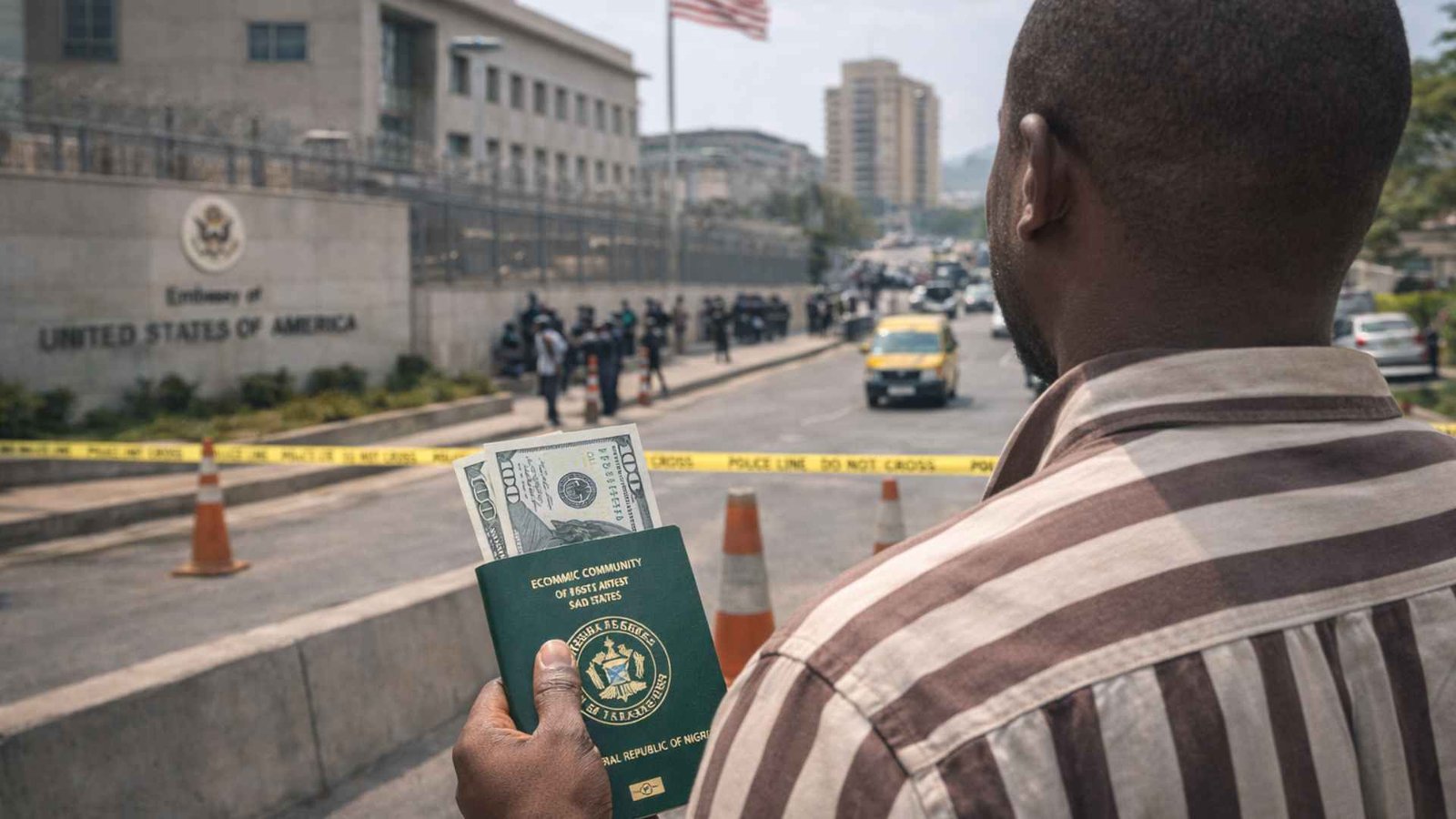



If you ever had a japa plan, there is still no way you would not have asked this same question, “how much does it cost to japa” from Nigeria.
Everyone has a japa story, obviously.
Your colleague who left for Canada last year. Your cousin doing night shifts somewhere in Birmingham. Your university friend who landed in Dubai with less than a million naira and is somehow “doing well.”
But nobody tells you the full number before you go.
They share the highlight reel. The snow photos. The first paycheck in pounds. What they skip is how close to zero their account was on landing day, and how much had already disappeared before they even boarded the plane.
This is the honest version of that conversation. A real, no-fluff breakdown of what it costs to japa in 2026, whether you’re targeting Canada, the UK, or the UAE. All figures reflect current exchange rates (USD at roughly ₦1,382, CAD at ₦994, GBP at ₦1,830 as of March 2026) and the latest fee schedules.
What This Article Covers
- The four stages of japa spending
- Country-by-country costs with actual 2026 figures
- The costs most people forget and regret
- The proof-of-funds trap that quietly kills Canada applications
- How to build your japa fund without losing your mind
How Much Does It Cost to Japa
The Four Stages of Japa Spending
Most people budget for the visa and nothing else. That is the single biggest financial mistake in the entire japa process, and it’s why so many people land abroad more broke than they expected to be.
Japa spending happens in four stages. Skip budgeting for any one of them and you’ll feel it.
Stage 1 is Qualification. Stage 2 is Application. Stage 3 is Pre-Departure. Stage 4 is Landing and Settlement.
Stage 1: Qualification Costs, Before You Even Apply
Before most countries will look at your application, you need to prove on paper that you qualify. That proof costs money, and significantly more than most guides published before 2025 will tell you.
English Language Tests (IELTS / PTE)
Canada, the UK skilled worker route, and Australia all require a language test score.
IELTS (British Council or IDP, computer-based) now costs ₦299,000 in Nigeria as of early 2026. Not ₦145k, not ₦160k. ₦299,000. A lot of older blog posts are still quoting the old price, so write this one down.
PTE Academic is slightly cheaper at around ₦260,000+.
Budget for at least two sittings. People resit more often than they publicly admit.
Educational Credential Assessment (Canada-specific)
Your Nigerian degree needs to be verified before Canada will recognise it. WES (World Education Services) is the standard body for this.
WES assessment: $220 to $260 CAD, which works out to roughly ₦220,000 to ₦260,000 at current rates.
Processing takes 7 to 10 weeks. Start this the moment you decide you’re serious. Nothing moves without it.
Police Clearance Certificate
Every destination country will ask for this. In Nigeria, you get it through the Nigeria Police Force or an accredited fingerprinting service for international use. Budget between ₦20,000 and ₦80,000, depending on where you process it and how quickly you need it.
Professional Certifications
Nurses heading to Canada or the US need to sit the NCLEX. Teachers need credential verification. Engineers may face conversion exams. Depending on your field, this stage alone can add ₦100,000 to ₦500,000+ on top of everything else.
Stage 1 total estimate: ₦400,000 to ₦900,000
Stage 2: Application Costs, the Visa Itself
This is the part most people think they already know. The actual numbers still catch people off guard.
Canada, Express Entry and Federal Skilled Worker
Current fees before the April 30, 2026 increase:
Processing fee per adult: $950 CAD Right of Permanent Residence Fee (RPRF) per adult: $575 CAD Total per adult: $1,525 CAD, roughly ₦1,520,000
Adding a spouse? Another $1,525 CAD. Each dependent child adds $230 CAD. Biometrics are $85 CAD per person.
After April 30, fees go up to approximately $1,590 CAD per adult. If your application is ready before that date, submit it now.
For a couple with one child, you’re already looking at ₦3.3 to ₦3.7 million in application fees. Before flights. Before accommodation. Before anything else.
Read Also: Canada Express Entry 2026: New Categories Are Open.
The Proof of Settlement Funds (This Is the One Most People Miss)
Canada requires you to show that you have enough money to support yourself after arrival. This is not a fee you pay. But it must sit in your bank account and be provable at the point of application.
For a single applicant in 2026: CAD 15,263, approximately ₦15,200,000. For a couple: CAD 19,002, approximately ₦18,900,000. Add one child and it climbs to CAD 23,399, approximately ₦23,300,000.
This money cannot be borrowed and it must be genuinely yours. Factor it into your savings plan from day one, not as an afterthought in the final month.
United Kingdom, Skilled Worker Visa
Fees updated from April 8, 2026:
Visa application fee for up to 3 years, applying from outside the UK: £819, roughly ₦1,500,000. For longer durations: £1,638 and above.
Then there’s the Immigration Health Surcharge (IHS): £1,035 per person, per year.
Run the numbers on a family of four applying for a three-year visa. That’s over £12,000 in IHS alone, which comes to more than ₦22,000,000 just in health surcharge. The visa fee is almost an afterthought at that point. Most people who don’t plan for the IHS end up shocked at the checkout screen.
UAE, Employment Visa
This one works differently. If you have a confirmed job offer, your employer typically covers the visa and work permit costs. Your out-of-pocket is mostly your own documents and flight.
Without a job offer, you need a sponsor or a freelance visa arrangement. Don’t improvise this part.
Stage 2 summary: Canada (single person): ₦1.5 million in fees, plus ₦15.2 million in proof of funds you must hold. UK (family of four, three-year visa): ₦24 million and above. UAE (employer-sponsored): ₦0 to ₦400,000.
Stage 3: Pre-Departure Costs, the Week Before You Leave
Your visa is stamped. You’re going. And the spending picks up pace again.
Medical examination: Required for both Canada and UK applications, done at a government-approved panel physician. Budget ₦80,000 to ₦150,000.
Document translation and notarisation: Birth certificates, marriage certificates, academic transcripts. Anything not in English needs certified translation. Budget ₦30,000 to ₦100,000 depending on how much you’re sending.
Flights (one-way from Lagos, current market pricing): Lagos to London: ₦1,200,000 to ₦2,000,000+ Lagos to Toronto: ₦1,500,000 to ₦2,500,000 Lagos to Dubai: ₦700,000 to ₦1,200,000
Excess baggage and shipping: People underestimate this every single time. Between airline fees and the boxes you couldn’t fit into your luggage, budget ₦100,000 to ₦200,000.
Winter clothing for Canada or the UK: If you’ve never bought a real winter coat in your life, you’re about to find out what they cost. Budget ₦150,000 to ₦400,000 for a functional cold-weather wardrobe. Buy it in Lagos if you can. It’s cheaper here than in London or Toronto.
Overlapping rent: Your Lagos apartment doesn’t know you got a visa. It keeps billing. You’ll likely be paying Lagos rent for one to two months while you’re already abroad. Don’t forget to account for it.
Stage 3 total estimate: ₦1.5 million to ₦4.5 million
Stage 4: Landing and Settlement, the First 90 Days
This is where people run out of money and panic. Budget for this stage aggressively.
First Month Rent and Deposit
In Toronto, a one-bedroom outside the downtown core runs CAD 2,000 to CAD 2,200 per month, roughly ₦2,000,000 to ₦2,200,000. Most landlords want first and last month upfront. That’s ₦4,000,000 to ₦4,500,000 before you’ve slept one night there.
In London, a one-bedroom outside Zone 2 starts at £1,300 to £1,800 per month. Same deal with the upfront deposit. Expect to spend ₦4,800,000 to ₦6,600,000 just to secure a flat.
Dubai is slightly more flexible on a month-to-month basis, but many landlords still prefer a full-year cheque. If your contract includes an accommodation allowance, factor that in.
Food, Transport, and the Learning Curve Tax
For the first three months abroad, before you know the cheap supermarkets, the right bus routes, and the meal-prep rhythm, you will overspend. It is not waste. It is the cost of learning a new city. Budget $300 to $600 USD per month (₦415,000 to ₦830,000) and don’t beat yourself up when you hit it.
SIM card, bank account setup, and admin costs: Budget the equivalent of ₦70,000 to ₦150,000.
The first paycheck gap: Most jobs abroad pay monthly. If you start work on March 10, your first paycheck might not come until April 30. That gap, sometimes six to eight weeks long, needs to be covered entirely from your savings. This is the thing that catches people most off guard.
Stage 4 total estimate: ₦4 million to ₦12 million for the first 90 days
The Real Number, No Sugarcoating
Here is the full picture for a single person going to Canada:
| Stage | Updated 2026 Estimate (₦) |
|---|---|
| IELTS, WES, police certificate | ₦620,000 |
| Canada visa application fees | ₦1,520,000 |
| Proof of settlement funds (must hold) | ₦15,200,000 |
| Medical, documents, pre-departure | ₦400,000 |
| Flight (Lagos to Toronto) | ₦2,000,000 |
| First 90 days abroad | ₦8,000,000 |
| Total including proof of funds | ₦27,740,000+ |
| Total excluding proof of funds | ₦12,540,000+ |
The proof-of-funds figure is not money you lose. It comes back to you once you land. But it must exist in your account at application time, which means you cannot use the same ₦15 million to pay your visa fee, book your flight, and also show as settlement funds. They are separate buckets of money.
Your real savings target is not ₦12 million. It is closer to ₦28 million.
For a UK family of four? Budget ₦35 to ₦55 million across all four stages. That number is uncomfortable. It is also what it actually costs.
How to Build Your Japa Fund Without Losing Your Mind
1. Save in dollars, not naira. Open a dollar account with Grey or Geegpay (now Raenest), both built specifically for Nigerians. Every month, convert a fixed naira amount into dollars. Don’t wait until the month before departure to move everything at once. By then the rate might not be in your favour.
2. Use PiggyVest or Cowrywise for the discipline part. Set a locked savings goal with your target amount and a realistic date attached to it. The lock feature is not an inconvenience. It is the point. It stops you from touching the money when Lagos rent gets tight.
3. Keep two completely separate savings buckets. One is for spending on the process (fees, flights, documents). The other is your proof-of-funds balance that you hold and show Canada. Mixing them is how people get to the application stage and realise they’re short.
4. Convert gradually across several months. Spread your forex purchases over 6 to 12 months using Wise or a domiciliary account with Access Bank or GTBank. Trying to convert a large sum in one week is how you get a bad rate at the worst time.
5. Add 25% on top of whatever your estimate says. Things cost more on the ground than on a spreadsheet. Always. Build the buffer in before you need it, not after.
Practical Takeaways
- Start saving at least 18 to 24 months before your target departure date. Twenty-four months is the safer number.
- Canada’s proof-of-settlement requirement (CAD 15,263 for a single person in 2026) is separate money. Budget for it separately from day one.
- The UK IHS surcharge is the most underestimated expense for families. Calculate it per person, per year, before you plan anything else.
- IELTS now costs ₦299,000 in Nigeria. Older guides quoting ₦145k are out of date. Don’t plan around old figures.
- Start your WES assessment immediately. It takes up to 10 weeks and nothing else moves without it.
- Plan for the first paycheck gap abroad. Six to eight weeks without income while your savings drain is not the time to be surprised.
Final Word
The people who land abroad without panic didn’t get lucky. They went in with real numbers, saved with actual discipline, and planned for the costs everyone else conveniently leaves out of their japa story.
You have the real numbers now. The rest is on you.
Start saving.
This article contains affiliate links. We may earn a commission if you sign up through our links, at no extra cost to you.
Sources:
UK immigration and nationality fees, April 8, 2026 — UK Home Office / GOV.UK
IELTS fees in Nigeria — British Council Nigeria
Express Entry application fees — IRCC Canada
Canada PR fee changes, April 30, 2026 — IRCC
Related: [Canada Express Entry 2026: What Nigerians Need to Know] | [Dollar vs Naira Savings: Where Should You Keep Your Money in 2026?]