



Everyone has an opinion on japa. Your colleague just got her UK visa and she’s celebrating. Your cousin in Canada just posted about finally getting his PR. Meanwhile, another friend who relocated two years ago just sent you a voice note talking about three jobs, one room, and a winter that feels like punishment.
The truth is that most people planning japa are not underestimating the opportunity abroad, they’re underestimating how long it takes to become financially stable.
This conversation is usually emotional. It should be mathematical.
This is not an argument for or against leaving. It is the honest financial analysis that most japa conversations never have.
This article covers:
- The real, total cost of relocating to the UK or Canada in 2026
- What life actually looks like financially in years one and two abroad
- What Nigeria’s post-recapitalisation economy now offers those who stay
- A framework for making the decision that is right for your specific situation
What Japa Actually Costs in 2026
The UK Route
A single person applying for a UK Skilled Worker Visa in 2026 should budget carefully. The UK Home Office increased visa fees from April 8, 2026, the route to settlement fee rose by £222 to £3,635, indefinite leave to remain applications increased by £197, and Skilled Worker visas issued for more than three years within the UK increased by £114.
Adding the Immigration Health Surcharge, flights from Lagos to London (₦800,000 to ₦1,500,000), and first-month expenses, a realistic total for a single applicant on a 3-year Skilled Worker Visa ranges from ₦12 million to ₦20 million before earning the first UK paycheck. If your employer covers the visa and health surcharge, you save approximately ₦8 million of that upfront.

The Canada Route
Canada increased permanent residence fees from April 30, 2026. The Right of Permanent Residence Fee rose to $600, the Provincial Nominee Programme fee increased to $990, and the citizenship fee rose to $123 according to Immigration, Refugees and Citizenship Canada (IRCC).
A single Express Entry applicant should budget for IELTS preparation (₦120,000–₦150,000), Educational Credential Assessment through WES (±₦350,000), application fees, a medical exam, flights, and proof of settlement funds. Total costs including first-year living expenses regularly exceed $28,000 which is approximately ₦43 million at current rates for a single person.
The Financial Reality of the first 2 years abroad (Years One and Two)
This is the part social media skips entirely.
Starting salaries abroad are higher in absolute terms. Canada’s average monthly post-tax salary is approximately $3,905, compared to Nigeria’s equivalent of roughly $193. On paper, that looks like a twenty-to-one advantage. In practice, the cost of living absorbs most of it.
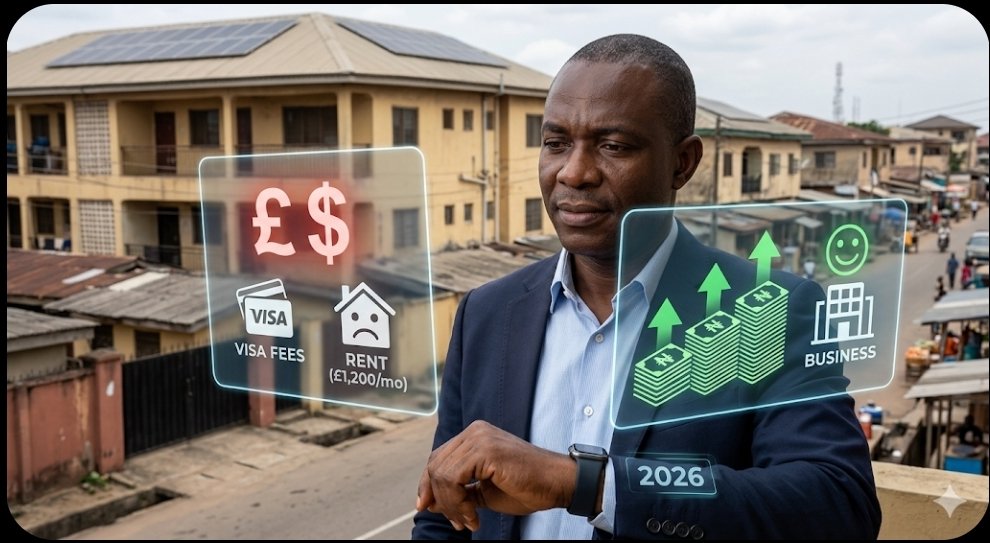
In London, Nigerians typically pay £1,100 to £1,400 per month for a single room, often in a shared flat. In Dublin, a Nigerian family of four can spend close to €2,500 monthly on rent alone, before childcare. When housing, food, transport, and utilities are accounted for, most Nigerians in the UK and Canada describe the first two years as financially neutral at best surviving, not building.
Most japa pathways only begin to pay off financially around year three or four. The first two years are essentially breakeven while having spent ₦12 million to ₦43 million to get there. This is not a reason not to go. But it is a reason to go with clear eyes rather than social media expectations.
What Nigeria’s Post-Recap Economy Now Offers
Nigeria’s banking recapitalisation was completed at the March 31, 2026 deadline. Major banks have all crossed the ₦500 billion capital threshold. Headline inflation has eased to 15.10%, the naira has stabilised, and GDP growth is projected at 4.68% for 2026.
What this means practically for someone considering staying:
- Stronger banks, better loan access.
Recapitalised banks are now better positioned to extend credit to individuals and SMEs. Mortgage products and business loans that were previously inaccessible are becoming more available.
- Investment returns that beat inflation.
Money market funds are currently yielding 21–24% per annum which is well above the 15% inflation rate. A Nigerian who puts the ₦12–20 million they would have spent on a UK move into Cowrywise or Risevest instead is growing that capital.
- Dollar income from Nigeria is now viable.
Remote work and AI-powered freelancing mean a Nigerian professional can earn $1,000 to $5,000 per month in foreign currency without relocating. Earning in dollars while living on naira is one of the most powerful financial strategies available in 2026.
- Real estate and agribusiness are opening up.
Post-recapitalisation capital flows are expected to increase lending to real estate developers and agribusiness ventures. The domestic opportunity set is wider in 2026 than it has been in years.
A Framework for the Decision
This decision should be made based on your specific situation and not FOMO, not social media, not what your colleagues are doing.
Go if:
- You have a job offer with employer-sponsored visa and health surcharge, this saves ₦8 million or more upfront
- Your profession has significantly higher earning potential abroad with limited ceiling in Nigeria
- You have family or a strong support network abroad that reduces first-year costs
- You have at least ₦5–15 million in savings to absorb the first 12–18 months without financial stress
Stay and build if:
- You earn in dollars or have the skills to earn in dollars remotely, the exchange rate advantage works in your favour without leaving
- You have a business or investment plan that benefits from Nigeria’s current economic momentum
- You do not yet have the savings to absorb two years of breakeven finances abroad
- You are already earning above ₦500,000 per month and see a clear path to growing that income
The Hybrid Strategy (What Smart People Are Quietly Doing)
This is the part you won’t see on social media:
- Stay in Nigeria
- Build dollar income
- Invest aggressively (money market, real estate, business)
- Then relocate later from a position of strength
Not desperation.

Practical Takeaways
- Run the real numbers before deciding. Total your actual japa cost: visa, health surcharge, flights, first-month expenses, and 12-month living costs. Compare that to what the same money builds invested in Nigeria.
- If you’re going, go with a job offer. Sponsored moves that cover visa and health surcharge costs save ₦8 million or more. This changes the entire financial equation.
- If you’re staying, don’t stay passively. Open a Cowrywise or Risevest account and put your savings in instruments that beat inflation. Build a dollar income stream through remote work or freelancing.
- Use Grey or Raenest to collect dollar income whether you’re abroad or at home. The exchange rate gap is a financial tool, use it deliberately.
- Stop comparing your chapter one to someone else’s chapter three. The UK and Canada posts you see are from people in year three and four. The year one and two reality is rarely posted.
- Make the decision for your life, not for optics. Both paths can lead to financial freedom. What separates outcomes is the quality of the financial planning behind the choice you make.
The Bottom Line
Japa is not a mistake. But it is also not a guaranteed upgrade. In 2026, for the first time in years, staying in Nigeria is a credible financial strategy and not just a consolation prize.
The bank recapitalisation, easing inflation, stable naira, and the rise of remote dollar income have created a genuine fork in the road. Both directions can lead somewhere good. What separates outcomes is not the decision to go or stay, it is the quality of the financial planning behind whichever choice you make.
Choose with your eyes open.
Next read: Dollar vs Naira Savings in 2026 – Where to Keep Your Money After Bank Recapitalization