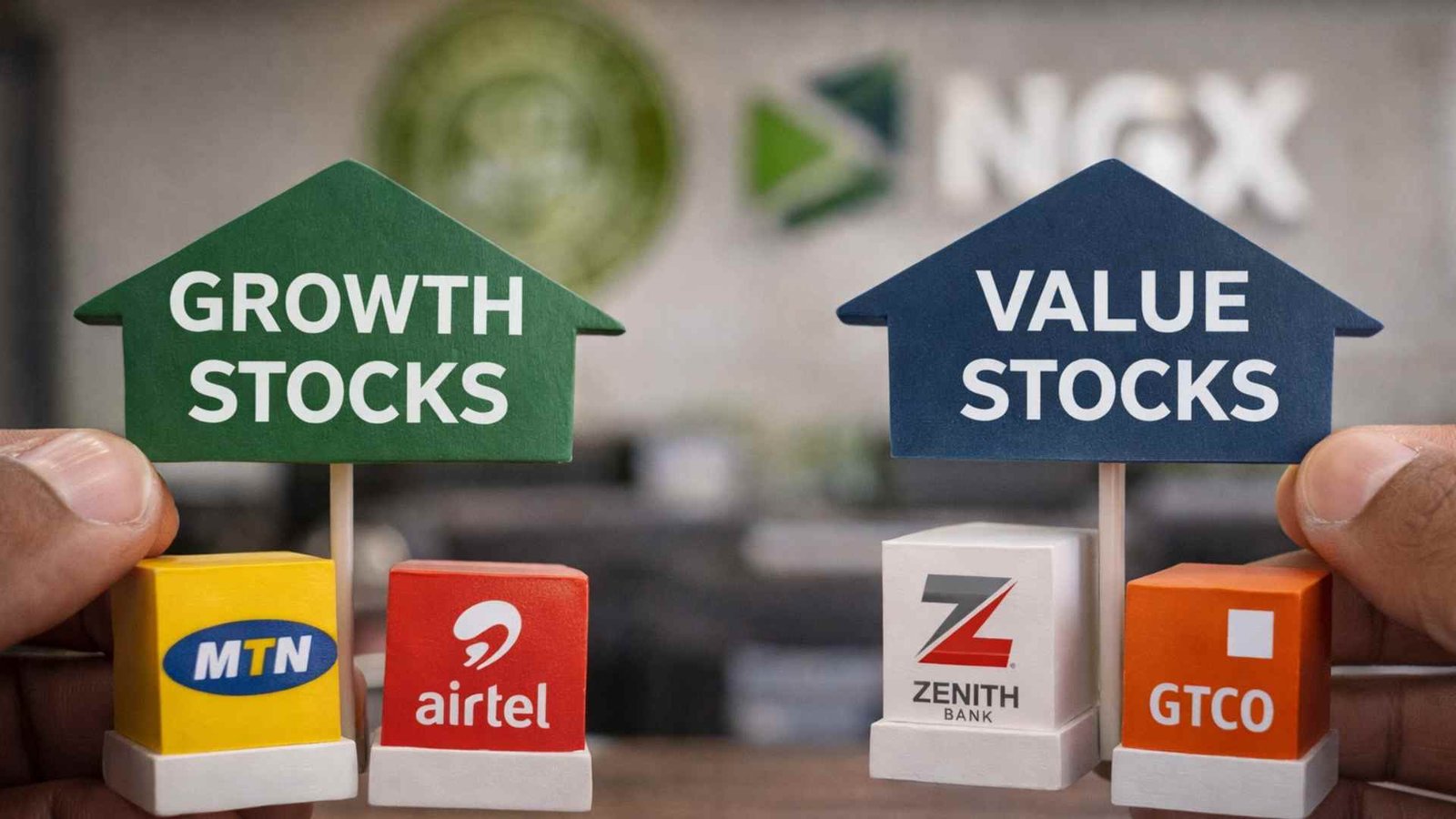



Every week, someone in Nigeria buys a stock because a friend told them to. Or because a Twitter/X finance account posted a chart with arrows pointing up. Or because the company name sounded solid. And every week, some of those people lose money that took them months to save.
Stock analysis sounds technical. It has a reputation for being something only fund managers and accountants do with spreadsheets at 11pm. But the basic version, the version that stops you from making expensive mistakes, is something any Nigerian investor can learn and apply in an afternoon.
This guide walks you through it, step by step, using real Nigerian companies and the NGX as the context. No textbook theory that does not apply here. No American examples that assume markets and regulations that do not exist in Nigeria.
By the time you finish reading, you will have a framework you can apply to any stock you are considering buying.
Why Most Nigerian Retail Investors Skip Analysis
The honest reason is that it feels unnecessary when a stock is moving. When GTCO is up 15% in two weeks and your colleague made ₦200,000, sitting down to read an annual report feels like watching from the sidelines. FOMO is a more powerful force than most investors admit.
The second reason is access. Many Nigerian retail investors do not know where to find company financials, or assume the information is buried in documents too complex to understand. This is less true than it used to be. Platforms like Proshare Nigeria, Nairametrics, and the NGX website itself publish company financials in formats that are reasonably readable for non-accountants.
The third reason is that a lot of “stock investing” in Nigeria is actually speculation dressed up as investing. People are not buying businesses. They are betting on price movements. That is a different activity with a different risk profile, and most retail investors who do it are not equipped for it.
Analysis is what separates investing from gambling with extra steps.
Start With the Business, Not the Stock Price
The first question to ask about any company is not “what is the share price?” It is “how does this company make money?”
This sounds obvious. It is not practiced nearly enough.
Take a company like Dangote Cement. It makes money by producing and selling cement across Nigeria and several other African countries. Its revenue goes up when construction activity increases, when it can raise prices, or when it expands into new markets. Its costs are driven heavily by energy (gas and diesel for its plants) and logistics. When you understand that, you can start asking intelligent questions. What is happening to construction activity in Nigeria? What are fuel costs doing to their margins? Are they entering any new markets that could drive future revenue?
Now take a company like MTNN (MTN Nigeria). It makes money primarily from voice calls, data subscriptions, and increasingly from fintech through MoMo. Its revenue grows as smartphone penetration increases and as Nigerians spend more time on data. Its risk factors include regulatory pressure from the Nigerian Communications Commission, currency risk (since some of its costs and parent obligations are dollar-denominated), and competition from Airtel.
Before you look at a single number, understand the business model. If you cannot explain in two sentences how the company makes money, you are not ready to buy the stock.
Read the Financial Statements (Yes, Really)
You do not need to be an accountant. You need to understand three documents and the key lines within each.
The income statement tells you whether the company is making money from its operations. Look at revenue (is it growing year over year?), gross profit margin (how much is left after direct costs?), and net profit (what actually reaches the bottom line after all expenses and taxes?). A company with growing revenue but shrinking margins is worth investigating further before you commit.
The balance sheet tells you what the company owns and what it owes. The key ratio to extract from this is the debt-to-equity ratio. If a company has significantly more debt than equity, it is carrying heavy financial obligations. In a high interest rate environment like Nigeria’s, high debt is a serious risk because borrowing costs eat into profits. Our guide on FGN bonds and how interest rates affect investment returns explains this dynamic if you want to dig deeper.
The cash flow statement tells you whether the company actually has cash coming in, not just profits on paper. A company can show accounting profit but have negative operating cash flow, which is a red flag. Cash flow does not lie the way earnings sometimes can through accounting adjustments.
You can find these statements on the NGX website under each company’s filings, or on Proshare and Nairametrics, which present them in cleaner formats.
The Key Ratios to Know
Once you have the financial statements, a handful of ratios help you make sense of them quickly.
The price-to-earnings ratio (P/E) is the most commonly referenced. It divides the share price by the company’s earnings per share. If GTCO is trading at ₦60 and earned ₦12 per share in the last year, its P/E is 5x. Whether that is cheap or expensive depends on what other banks in the same sector are trading at, and what growth you expect from the business going forward. Understanding whether a stock looks cheap or expensive relative to peers is the foundation of value investing on the NGX, and getting this ratio right is where that analysis starts.
The price-to-book ratio (P/B) compares the share price to the company’s net assets per share. Banking stocks in Nigeria are often analyzed this way. A P/B below 1 means you are buying the stock for less than the accounting value of the bank’s assets, which can signal undervaluation, but also requires you to assess the quality of those assets.
Return on equity (ROE) tells you how efficiently the company generates profit from shareholders’ money. A consistently high ROE (above 15% in the Nigerian context) is a strong positive signal. It means management is doing something right with the capital entrusted to them.
Dividend yield matters if you are investing for income. Divide the annual dividend per share by the current share price. If a stock pays ₦5 in dividends and trades at ₦50, the yield is 10%. For income-focused investors who are also looking at fixed income options like treasury bills as an alternative, dividend yield is the direct comparison point.
Debt-to-equity ratio as mentioned above. Keep it in mind for any company you analyze, but pay special attention to it for manufacturers and industrial companies whose operations are capital-intensive.
Look at the Trend, Not Just One Year
One year of financial data tells you very little. Five years tells you a story.
What you want to see is a consistent direction. Revenue growing steadily. Profit margins holding or improving. Debt levels staying manageable. Dividends being maintained or increased. These trends are what separate a genuinely strong business from one that had a good year.
Conversely, a single bad year does not automatically disqualify a company. If you can understand why earnings fell (a one-off FX loss, a regulatory fine, a commodity price spike), and you can see that the underlying business is intact, that bad year might represent exactly the kind of dip that creates a buying opportunity in fundamentally sound value stocks.
What you want to avoid is a company where multiple years show declining revenue, rising debt, and shrinking margins with no clear explanation or turnaround plan. That is not a temporary dip. That is a structural problem.
Understand the Sector Context
No company operates in isolation. Analyzing a stock without understanding its sector is like grading an exam without knowing the subject.
For Nigerian banking stocks, the relevant context includes CBN regulations, capital adequacy requirements, the interest rate environment, and non-performing loan (NPL) ratios across the sector. The bank recapitalization exercise that concluded in 2026 fundamentally changed the competitive landscape and is worth understanding before buying any bank stock.
For consumer goods companies like Nestle or Unilever, the key context is purchasing power trends among Nigerian consumers, raw material import costs, and currency exposure. These companies earn in naira but import significant inputs in dollars, which makes naira devaluation a direct hit to their margins.
For telecoms companies like MTN and Airtel, the context is data penetration rates, 5G rollout timelines, NCC regulatory actions, and fintech ambitions. The mobile money space in particular is becoming a significant revenue battleground.
For cement companies like Dangote Cement and BUA Cement, infrastructure spending by the federal government, real estate activity, and energy costs are the dominant variables.
Read the annual report’s management discussion section. It is written in plain English (or at least plainer than the financial statements) and tells you directly what management sees as their opportunities and risks. If management is consistently wrong in their own assessments year after year, that tells you something about the quality of leadership.
Check the Corporate Governance Record
This is the step most retail investors skip completely, and it has cost many Nigerians significant money over the years.
Corporate governance means: how well is this company run? Are shareholders treated fairly? Is management transparent about problems? Has the company ever been sanctioned by regulators for misconduct?
Some questions worth asking before buying any NGX stock: Has the company ever had an audit qualification? Have there been any regulatory sanctions from the SEC, CBN, or NCC in recent years? Does the company pay dividends consistently or does it make promises it does not keep? Is the ownership structure transparent, and do major shareholders have interests that might conflict with minority investors?
You can find some of this through NGX filings, the SEC Nigeria website, and financial news platforms that track corporate governance issues in the market.
Use Multiple Sources Before Deciding
No single metric or source should be the reason you buy a stock. The analysis process is about building a picture from multiple angles.
You read the financials. You understand the business model. You compare key ratios to sector peers. You look at five-year trends. You consider the macro environment affecting the sector. You check the governance record. And then you make a judgment call about whether the current price reflects a fair, undervalued, or overvalued position.
Platforms like Proshare Nigeria and Nairametrics publish sector reports and stock analyses that can help you cross-check your own reading. The NGX itself publishes company announcements and financial results as they are released. The DMO and CBN websites give you the macroeconomic context around interest rates and monetary policy that affects stock valuations broadly.
If after all of this you cannot convince yourself why the company is worth owning at the current price, do not buy it. There is always another opportunity. The NGX is not going anywhere.
A Practical Checklist Before You Buy Any NGX Stock
Before committing money to any stock, run through these questions honestly:
Can you explain in two sentences how this company makes money? Have you looked at at least three years of revenue and profit trends? Do you know the P/E ratio and how it compares to sector peers? Have you checked the debt load and whether the company generates real cash? Do you understand what macro or sector factors could hurt this stock? Have you looked at the dividend history if income is part of your goal? Are you aware of any recent regulatory issues or governance concerns?
If you can answer yes to all of these, you are making an informed investment decision. If you cannot, you are speculating, and there is nothing wrong with acknowledging that distinction before it costs you.
The Nigerian stock market rewards patient, informed investors more than any other type. The people who build real wealth through the NGX are not the ones chasing daily price movements. They are the ones who understand what they own and why, and who can sit calmly through volatility because their conviction is based on research rather than rumour.
That is the edge you are building when you learn to analyze before you buy.