


Somebody told you to ‘invest your money’ and now you have seventeen tabs open, a headache, and still no idea where to start. That is the most Nigerian investing experience there is. The information is scattered, the jargon is heavy, and every platform sounds like it is one bad CBN announcement away from swallowing your funds.
Here is what nobody tells beginners: investing in Nigeria does not have to be complicated. It does not require a finance degree, a big salary, or connections to someone in Aso Rock. What it requires is knowing which step to take first, and taking it before inflation takes another bite out of your savings.
This guide breaks it all down plainly. By the end, you will know exactly where to put your first naira, what risks are real versus imagined, and how to sleep at night knowing your money is actually working.
What This Guide Covers
- Why you need to start investing in Nigeria now, not later
- The mindset shift that separates investors from savers
- The six main investment options available to Nigerian beginners in 2026
- A beginner’s roadmap: your first three steps
- The mistakes first-time investors make, and how to avoid them
- Practical takeaways you can act on today
Why Investing in Nigeria Is Not Optional Anymore
Inflation in Nigeria has been running between 15% and 33% over the past two years, depending on who you ask and what you are buying. Your bank savings account is paying somewhere around 8% per annum. Do that maths: you are not growing your money. You are watching it shrink in slow motion.
A ₦500,000 emergency fund sitting in a regular savings account at 8% interest is worth less in real terms next year than it is today. That is not fear-mongering and that is just what inflation does when your returns cannot keep up with it.
The good news is that Nigerians now have more accessible investment options than any generation before them. Apps like PiggyVest, Cowrywise, Risevest, and Bamboo have removed the barriers that used to make investing feel like it was only for people in suits on Victoria Island. You can start with ₦100. You can start today.
The only thing that actually costs you here is waiting.
The Mindset Shift: From Saver to Investor
Saving and investing are not the same thing, and treating them as if they are is one of the most common money mistakes Nigerians make.
Saving is keeping money safe. It is your emergency fund, your rent buffer, your peace of mind. It should be accessible. Investing is putting money to work with the expectation that it grows over time — and accepting that some risk comes with that.
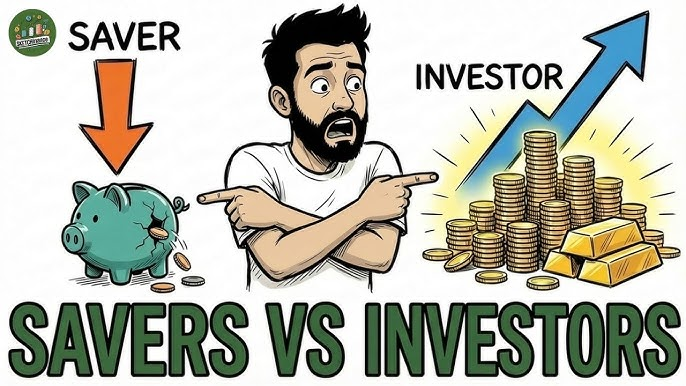
The shift happens when you stop asking ‘where do I keep my money?’ and start asking ‘what can my money be doing right now?’ Even an extra ₦20,000 locked into a high-yield product at 20% per annum earns you ₦4,000 by year-end for doing nothing. That is one full tank of fuel (well, almost, at 2026 prices).
You do not need to be rich to invest. You need to start with what you have and build from there. The Nigerians winning financially right now are not necessarily the ones earning the most — they are the ones whose idle money stopped being idle.
The Six Investment Options for Nigerian Beginners in 2026
Here is an honest look at what is available, what each one actually does, and who each one is for.
| Investment | Where to Start | Potential Return | Risk Level |
|---|---|---|---|
| High-yield savings | PiggyVest, Cowrywise | 18–22% p.a. in naira | Low |
| Dollar savings | Risevest Dollar Vault | 10% p.a. in USD | Low–Medium |
| Nigerian stocks | Bamboo, Chaka | Varies — market-driven | Medium–High |
| Treasury Bills | Your bank or a broker | 18–22% p.a. | Very Low |
| Real estate | Risevest, direct purchase | 13–15% p.a. (USD plans) | Medium |
| Mutual funds | Cowrywise, ARM | 15–20% p.a. (floating) | Low–Medium |
Rates as of April 2026. Always verify current figures inside each platform before committing.
1. High-Yield Savings Apps — The Best Place to Start
If you are a complete beginner, this is your entry point. Platforms like PiggyVest and Cowrywise let you earn 18–22% per annum on naira savings — roughly two to three times what your bank offers — with your money protected through SEC-regulated structures or NDIC-covered partner banks.
PiggyVest’s SafeLock product lets you lock money and earn interest upfront. Cowrywise runs automated deductions so you save without thinking about it. Both are legitimate, both have millions of Nigerian users, and both can be started with ₦100.
This is your foundation. Build it before you do anything else.
2. Dollar Savings: For Protecting Against Naira Depreciation
If you watched the naira go from ₦500 to the dollar in 2021 to over ₦1,600 by 2024, you understand why some of your savings need to be in a currency that is not affected by what the CBN decides next quarter.
Risevest’s Dollar Vault pays 10% per annum in USD, with interest credited monthly. You can start with as little as $1. That 10% is in dollars, so you are earning on an asset that is not losing ground to naira depreciation. For long-term wealth, this matters more than the percentage suggests.
3. Nigerian Stocks: For the Patient, Research-Ready Investor
The Nigerian Stock Exchange (NGX) has delivered strong returns in certain periods, but it is not a beginner-and-forget option. Stock prices move with the economy, corporate performance, and global conditions. You need to understand what you are buying.
Apps like Bamboo and Chaka make it easy to buy shares in Nigerian companies. If you want exposure to stocks without picking individual companies, some Cowrywise plans invest in equity funds managed by professionals.
Start small here. ₦10,000–₦50,000 to learn the market before you go deeper.
4. Treasury Bills: The Underrated Low-Risk Option
Treasury Bills (T-Bills) are short-term government debt instruments — meaning you are lending money to the Nigerian government and they pay you back with interest. Current yields have been in the 18–22% range, which is competitive with high-yield savings apps.
The difference: T-Bills are issued directly by the CBN, making them one of the lowest-risk options in the Nigerian market. The catch for beginners is that the minimum investment is typically ₦50,000–₦100,000 and you need to go through a bank or licensed broker to access them. Once you have built a starter savings base, T-Bills belong in your portfolio.
5. Mutual Funds: Professional Management Without the Complexity
A mutual fund pools money from many investors and puts it into a mix of assets; bonds, stocks, money market instruments, managed by professionals. You do not need to decide where the money goes. Someone whose full-time job is watching the market does that for you.
Cowrywise is the easiest entry point for mutual funds in Nigeria, with options including money market funds currently returning 15–19.6% per annum. ARM Investment Managers is another reputable option with a longer track record.
This is a solid middle-ground option: more hands-off than stocks, potentially higher return than a basic savings account, and genuinely diversified.
6. Real Estate: Long Game, Big Returns
Real estate is the investment every Nigerian uncle brings up at Christmas, and for good reason — Nigerian property has historically held value well against inflation and currency depreciation. The problem for beginners is obvious: land and property require capital most people in their 20s and early 30s do not yet have.
The alternative in 2026 is fractional real estate investing through platforms like Risevest, where you can invest in US commercial real estate from Nigeria with as little as $10. Returns have historically been in the 13–15% per annum range in USD. It is not a replacement for owning property in Lagos or Abuja eventually — but it gives you exposure to the asset class while your savings grow.
Your First Three Steps as a Nigerian Beginner Investor
Forget the sixteen-step frameworks. Here is what actually matters when you are starting from zero.
Step 1: Build a one-month expenses buffer first.
Before you invest a single naira, put one month of your living expenses somewhere accessible and high-yield. PiggyVest’s PiggyBank works well for this — daily interest, flexible access. This is your safety net. Without it, you will break your investments every time life happens.
Step 2: Lock your first investment for 90 days.
Take ₦50,000–₦100,000 (or whatever you can genuinely afford to leave alone) and put it on SafeLock for 90 days at 22% per annum. Watch the interest arrive upfront. See how it feels to have money working without you touching it. That experience rewires how you think about money faster than any article will.
Step 3: Open a dollar position.
Once your naira savings are in motion, open a Risevest account and put $10–$50 into the Dollar Vault. It does not matter how small it is. What matters is that you have a position in a currency that is not naira, earning 10% per year in USD. That habit, grown over time, is what protects Nigerian wealth from the exchange rate risk that has hurt so many people.
The Mistakes Beginner Investors Make in Nigeria
These are not hypothetical. These are the patterns that show up repeatedly in Nigerian finance communities online and offline.
Chasing the highest rate without checking the platform.
If a platform is promising 50% monthly returns, that is not investment. The picture is clearly indicating that it’s a Ponzi scheme wearing a fintech jacket. Better off, stick to SEC-regulated platforms like PiggyVest, Cowrywise, Risevest, Bamboo. They are all regulated. Unknown platforms with Instagram-only presences and no physical address are not.
Investing money you might need in three months.
Locked products pay better rates for a reason — they need to hold the money for the term. If you lock ₦200,000 in a SafeLock and then have a medical emergency two months in, you either break the lock and lose interest or you are in trouble. Never lock money you might need. Only invest what is genuinely surplus to your short-term needs.
Keeping everything in naira.
The naira has lost significant value against major currencies over the past decade. Keeping 100% of your savings in naira means 100% exposure to that risk. Even a small dollar position like 20–30% of your savings, meaningfully reduces your vulnerability to exchange rate moves.
Waiting until you have ‘enough’ to start.
There is no minimum wealth threshold for investing. The minimum on PiggyVest is ₦100. The minimum on Risevest is $1. The person who starts with ₦5,000 today and adds ₦5,000 monthly will significantly outperform the person who waits to have ₦500,000 before they begin. Compound interest rewards consistency more than lump sums.
Practical Takeaways
- Open PiggyVest today and set up an automatic daily save, even ₦500 per day. That is ₦182,500 by year-end before interest.
- Put your first locked investment on SafeLock for 90 days. Earn the interest upfront and leave it alone.
- Open a Risevest account and put any amount into the Dollar Vault. Build the habit of holding a dollar position before the amount matters.
- Ignore any investment platform that is not SEC-regulated, has no verifiable Nigerian registration, or promises returns above 30% monthly.
- Revisit your investment split every three months. As your income grows, increase the amount going into each pocket.
Final Word
Investing in Nigeria in 2026 is genuinely more accessible than it has ever been. The apps are better, the minimum amounts are lower, and the information, like this guide, is easier to find. The barrier is no longer access. The barrier is starting.
You do not need to understand every financial instrument. You do not need to watch stock charts every morning. You need to move your money off the sidelines and into something that at least keeps pace with inflation, and then build from there as your confidence grows.
Start with one step. Open one account. Put in one amount. The rest follows from that first move.
→ Start saving and investing with PiggyVest
→ Automate your goals with Cowrywise
→ Protect your savings in dollars with Risevest
→ Explore Nigerian stocks on Bamboo
Related reads:
PiggyVest vs Cowrywise vs Risevest: Which One Should You Be Using in 2026?
Dollar vs Naira Savings: Where Should Nigerians Keep Their Money in 2026?
Data and rates referenced as of April 2026. Sources: CBN, NBS, PiggyVest, Cowrywise, Risevest, Bamboo, Nairametrics. Always verify current rates inside each platform before committing funds.
Related reading: If you’re weighing where to actually put your money, see Money Market Funds vs Treasury Bills: Where Should You Keep ₦500,000 in Nigeria?.
Related reading: Not sure which instrument fits your timeline? See Where Should You Put Your Money for 6 Months, 1 Year, or 5 Years?.