

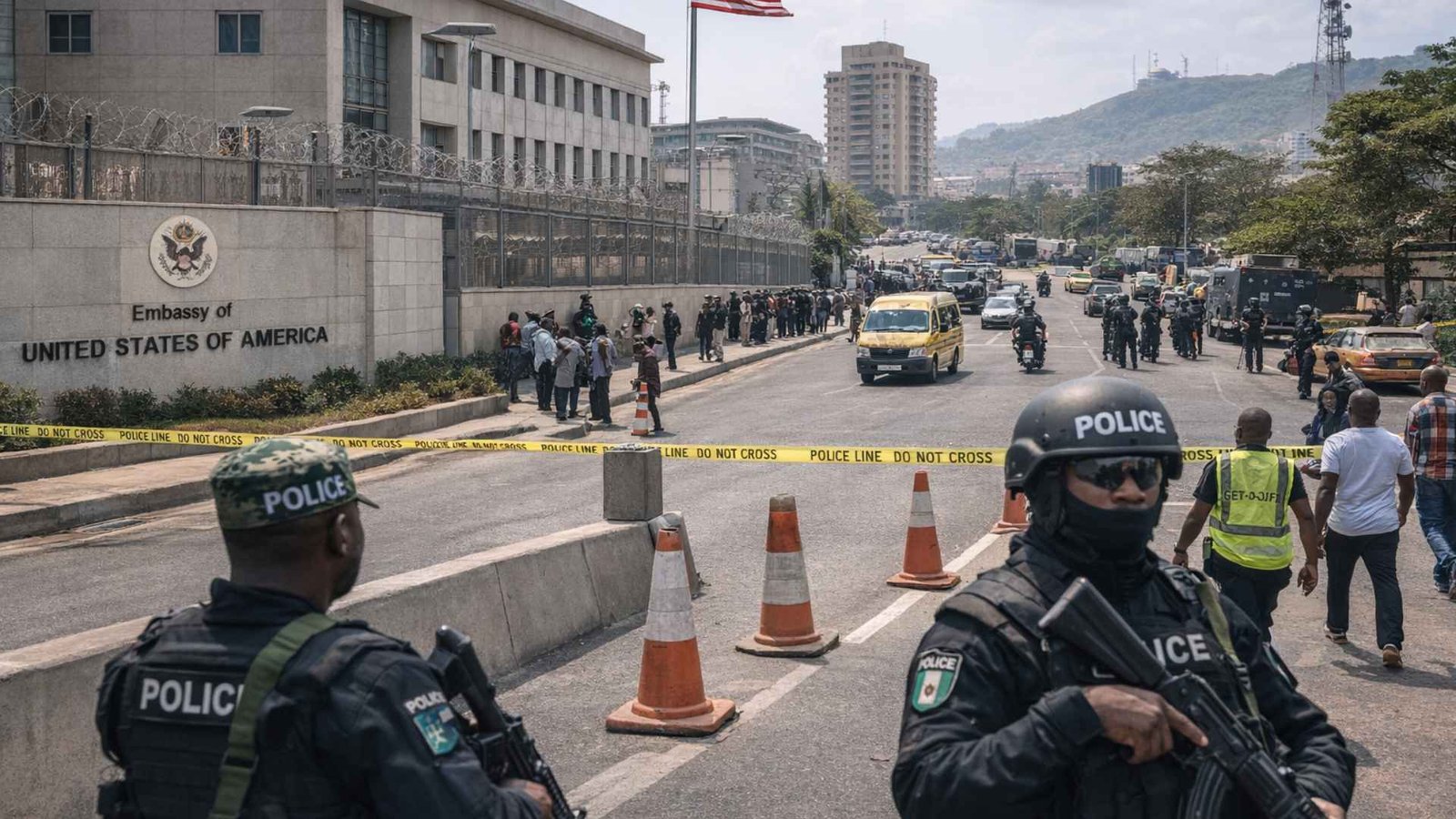
When a major Western embassy starts sending staff home, most people read it as a security story. And it is. But for anyone who has money invested in Nigeria, or is trying to decide whether to invest here, it is also a financial signal worth understanding properly.
On April 8, 2026, the US State Department authorised the voluntary departure of non-emergency Embassy Abuja staff, citing a deteriorating security situation. Visa services were suspended. Twenty-three Nigerian states are now classified under the highest travel risk category. This is not a routine diplomatic development.
What does it actually mean for the Nigerian economy, for foreign direct investment, and for where ordinary Nigerians should position their money right now? That is the question this article is here to answer.
Why Foreign Investor Perception Matters (Even to You)
You might be thinking: I am not a foreign investor. I am a Nigerian trying to grow my savings. Why does what Washington thinks about Abuja affect me?
It affects you because of how capital flows work. Nigeria’s economy depends significantly on foreign direct investment; the money that builds factories, funds energy projects, supports fintech growth, and creates jobs. When international signals turn negative, that capital either pauses or exits. The downstream effects hit everyone: slower job creation, pressure on the naira, reduced government revenue, and tighter access to credit.
You might be caught whispering this as a theory. In our opinion, it is not theory. Nigeria has been here before. Every time investor confidence takes a hit, regardless of whether it’s from security deterioration, policy reversals, or diplomatic signals, you would notice the effects showing up in market liquidity, exchange rates, and the investment returns ordinary Nigerians are counting on.
What the Embassy Departure Specifically Signals
It is worth being precise about what this development does and does not mean.
What it does mean:
- Washington has intelligence pointing to an elevated threat level in Abuja specifically. So, the voluntary departure authorization is not a precautionary PR move. On the contrary, it reflects a real assessment of risk.
- The diplomatic and business community in Abuja will take note. Other embassies, multinational corporations, and institutional investors monitor US State Department advisories closely when making operational and investment decisions.
- Nigeria’s position as an investment destination just became harder to pitch internationally, at least in the short term. Negotiations, deal signings, and partnership meetings that require foreign executives to be physically present in Abuja face new friction.
What it does not mean:
- Nigeria’s economy is collapsing. That’s not true. The fundamentals, that is, population size, energy sector reform, fintech growth, capital market expansion, all have not changed overnight.
- All investment in Nigeria is now off the table. Again, not correct. Lagos-based and diaspora-connected investment channels remain active. The Cowrywise, Risevest, and NGX ecosystem did not close on April 9.
- This situation is permanent. Absolutely not. Embassy operations have been disrupted before and resumed. The Lagos Consulate remains fully operational.
| The signal matters more than the specific event. The question for your money is not ‘Is Nigeria now dangerous?’ You already know the answer to that is complicated. The question is: ‘Does this change my investment timeline or risk tolerance?’ |
How This Could Affect Key Investment Areas
The Naira and FX
Security deterioration that captures international attention typically puts pressure on the naira. When foreign portfolio investors perceive Nigeria as higher risk, they reduce naira-denominated exposure and move into dollar assets. This adds sell-side pressure to the naira. In practical terms: if you have been sitting on the fence about moving some savings into a dollar-denominated product; Bamboo, Risevest’s dollar fund, or a Eurobond-linked instrument, the case for diversification just got a small nudge stronger.
Nigerian Stocks (NGX)
Foreign portfolio investment on the NGX has been recovering since the FX reforms of 2023. A security signal of this magnitude could soften that recovery temporarily, particularly for banking stocks which are most sensitive to macro risk perception. This is not a signal to exit Nigerian equities. It is a signal to make sure you understand why you own what you own, and that your positions reflect a long enough time horizon to absorb short-term sentiment shifts.
Real Estate and Physical Assets
Abuja property investment, in particular, carries a new layer of risk conversation. Diaspora buyers planning off-plan purchases in the FCT should factor the current security climate into their due diligence. Lagos real estate remains a different risk profile entirely.
Treasury Bills and Government Bonds
For risk-averse Nigerian investors, this environment actually strengthens the case for CBN Treasury Bills and FGN Bonds. These instruments offer guaranteed naira returns backed by the federal government, with no direct exposure to security-related business disruption. With T-bill rates still competitive in 2026, this is one of the most sensible places to park short-to-medium term naira savings while watching how the macro picture evolves.
What Smart Nigerian Investors Do in Uncertain Times
This is not a moment for panic moves. It is a moment for deliberate positioning. Here is how to think about it:
- Do not exit long-term positions based on short-term noise. If you own NGX stocks or a PiggyVest target savings with a two-to-five year horizon, a diplomatic development does not change your thesis. Stay the course.
- Increase your dollar exposure if you have not already. This is not a new idea, it is one NairaSeed has been consistent on. Events like this are exactly why. A portion of your savings in dollar-denominated assets gives you a buffer against naira pressure that security events can trigger.
- Be cautious with new capital commitments in Abuja specifically. If you were about to make a significant investment tied to Abuja’s business environment; property, a business lease, a new venture, it is reasonable to wait sixty to ninety days and watch how the situation develops.
- Revisit your emergency fund. If events like this make you realise your financial cushion is thinner than it should be, prioritise that before anything else. Three to six months of expenses in a liquid naira account is your first line of defence against any disruption, whether personal or macroeconomic.
- Stay informed from credible sources. The noise around this story will intensify. Stick to NBS data, CBN circulars, and credible financial media for your investment decisions. Social media speculation about what ‘really’ happened at the embassy is not a basis for moving money.
The Bigger Picture: Nigeria’s Investment Narrative in 2026
It would be dishonest to pretend that events like this do not matter. They do. Nigeria’s ability to attract the capital it needs to fund infrastructure, energy, and jobs depends partly on its reputation as a place where business can be conducted safely and predictably.
At the same time, the Nigerian investment story is not written by any single event. The Dangote Refinery is operational. The NGX is growing. The capital markets are deepening. The fintech sector is expanding. The bank recapitalisation has strengthened the balance sheets of the institutions that hold most Nigerians’ savings and investments.
Reading the warning signs clearly is not pessimism. It is what protects your money from decisions made on incomplete information.
| The investors who will do best in Nigeria over the next decade are not the ones who ignore the risks. They are the ones who understand them clearly enough to price them correctly and position accordingly. |
Bottom Line
The US Embassy departure from Abuja is a real signal that deserves serious reading, not dismissal and of course, not panic. For your money, the practical responses are: maintain your long-term positions, increase dollar diversification if you have not already, be cautious about new Abuja-specific commitments, and make sure your emergency fund is solid.
Nigeria has navigated more serious disruptions than this. The Nigerians who came out ahead were the ones who had a financial plan that could absorb the volatility.
Related reading on NairaSeed:
- How to Invest in Treasury Bills in Nigeria (Step-by-Step)
- Government Bonds in Nigeria Explained
- Nigeria’s 4.68% Growth Projection 2026: How Regular People Can Position Their Money
NairaSeed.com: Money wisdom, planted in Africa.
These articles are for informational purposes only and do not constitute financial advice. Always consult a qualified financial professional before making investment decisions.