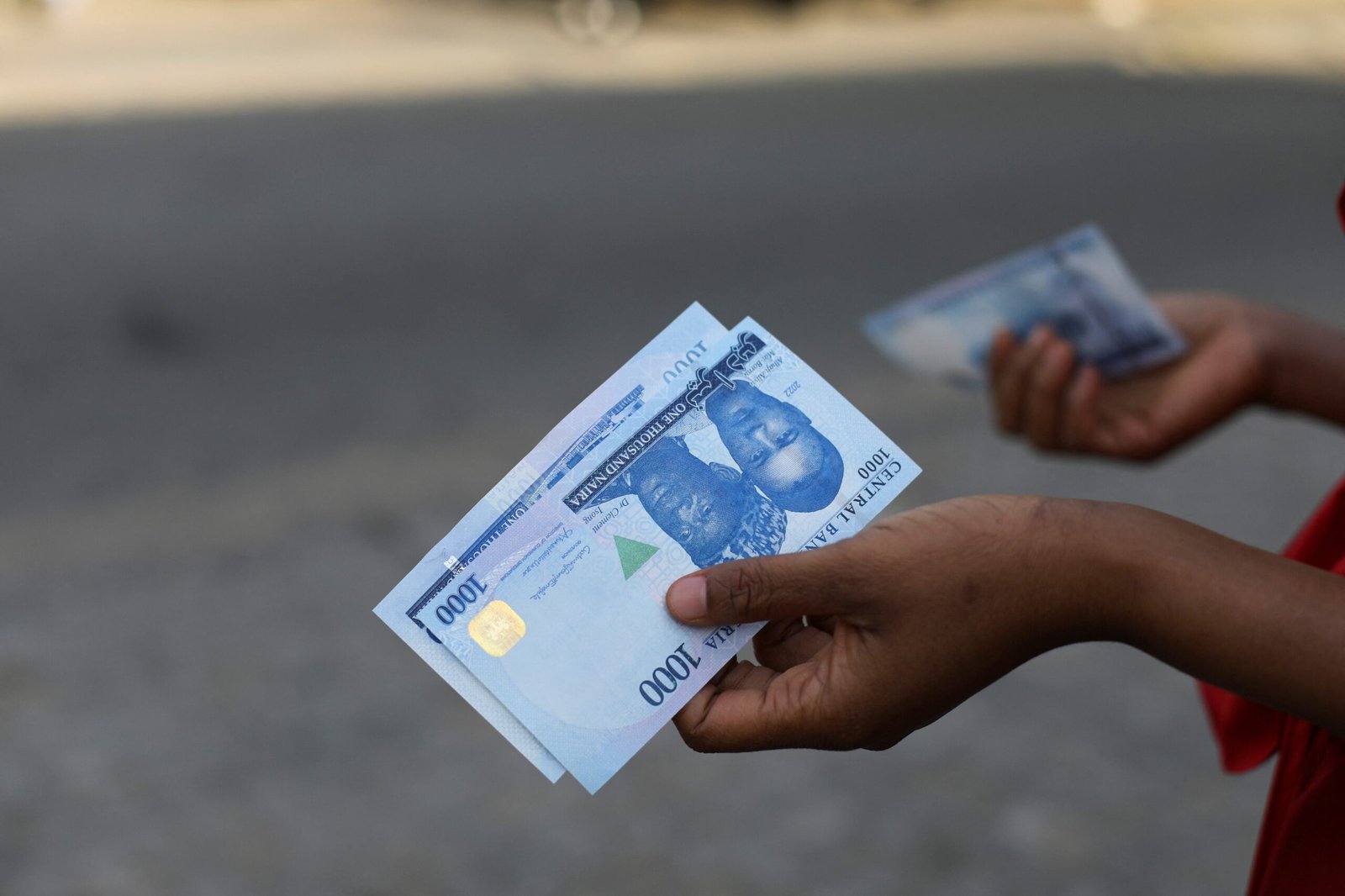


This question comes up no matter how much money is involved — ₦50,000 or ₦5 million, the logic is the same. And it comes down to one comparison most people never actually make: what does your debt cost you, versus what could your money realistically earn if you invested it instead?
Short answer: if your debt’s interest rate is higher than what you could realistically earn investing, pay off the debt first — it’s a guaranteed return equal to the interest you stop paying. If your debt is cheap relative to realistic investment returns, you have more room to invest instead, or do both at once.
The comparison that actually decides this
Paying off a debt early isn’t really a separate category from investing — it’s an investment with a guaranteed, risk-free return equal to whatever interest rate you were paying. If a loan is costing you 8% a month, clearing it early is the equivalent of a guaranteed 96% annual return. No Treasury Bill, Money Market Fund, or stock portfolio in Nigeria realistically matches that. Once you see it this way, the decision usually isn’t close.
Where it gets genuinely close is when the debt is cheap. A well-priced bank loan or asset-backed loan in the mid-to-high teens percent per year sits in roughly the same range as what a good Treasury Bill or Money Market Fund can pay. At that point, either choice is defensible, and factors beyond pure math — how much you value being debt-free, how stable your income is — reasonably tip the decision.
Roughly where debt sits by cost
Loan-app and quick-cash debt is almost always the easiest call: many charge monthly rates of 2%–15%, and some considerably more, which works out to APRs well above 30% and in some cases into the hundreds of percent once fees are included. This kind of debt should be cleared before anything else, essentially without exception.
Bank loans, asset finance, and salary-backed loans usually sit lower, often somewhere in the high teens to mid-20s percent annually. This is the genuinely close range — compare the actual rate you’re paying against current Treasury Bill or Money Market Fund yields before assuming either side wins automatically.
Anything cheaper than that — a subsidized loan, an interest-free arrangement, or a very low-rate facility — tips the other way: there’s little reason to rush repayment ahead of schedule when your money could be earning more elsewhere.
Two things the math alone won’t tell you
First, an emergency fund comes before either option. If you have no buffer and something goes wrong, you may end up borrowing again — often at a worse rate than the debt you just paid off. Second, investment returns aren’t guaranteed the way paying off debt is. A Money Market Fund yielding 18% today isn’t locked in at that rate forever, while debt you’ve paid off stays paid off. That certainty is worth something, even when the pure math is close.
Can you do both at once?
Yes, and for many people this is the realistic answer rather than an all-or-nothing choice. If you have both moderate-cost debt and spare money each month, splitting — extra debt payments plus a smaller ongoing investment — is reasonable, provided the debt itself isn’t in the high-cost category above. What doesn’t make sense is investing while carrying loan-app-level debt; in that case, nearly all of it should go toward clearing the debt first.
Risks and caveats
This only works if you use your debt’s real APR, not the headline monthly rate — fees and compounding can make the true cost significantly higher than it first appears. It also assumes the investment return you’re comparing against is a realistic, current figure, not an optimistic number pulled from a platform’s marketing. And skipping an emergency fund to chase either option — faster debt payoff or a higher return — tends to backfire the first time something unplanned happens.
What to do next
Work out your actual debt APR, compare it against current Treasury Bill or Money Market Fund yields, and check whether you have an emergency buffer first. If you want to see this worked through with real naira amounts, the two examples below walk through ₦500,000 and ₦1,000,000 specifically.
Related NairaSeed resources:
- I Have ₦500,000. Should You Invest It, Save It, or Use It to Clear Debt?
- I Have ₦1 Million. What Should I Do With It?
- Money Market Funds vs Treasury Bills: Where Should You Keep ₦500,000 in Nigeria?
- How to Build a 6-Month Emergency Fund in Nigeria (Even on a Small Salary)
- Money Market Fund vs Treasury Bill Calculator
FAQ
Is it ever wrong to pay off debt early, even if it’s cheap?
Not wrong exactly, but it can mean leaving money on the table if that cheap debt is sitting well below what you could otherwise earn investing — in that case, paying it off ahead of schedule isn’t the highest-value use of the money.
Does this change if the debt is to family rather than a bank or app?
The math is the same if there’s a real interest cost, but many people reasonably prioritize family debt for relationship reasons beyond the numbers — that’s a legitimate factor this framework doesn’t try to override.
Sources: Nairametrics reporting on Nigerian loan app and lending rates (2026); general personal-finance principles on guaranteed versus market-rate returns.
Disclaimer: This article is for financial education and does not constitute personalized financial advice. Confirm your actual debt APR and current investment yields before deciding.
Related reading: Got a bonus or windfall instead of a fixed amount saved? See What Should You Do With Your Bonus or Extra Income?.